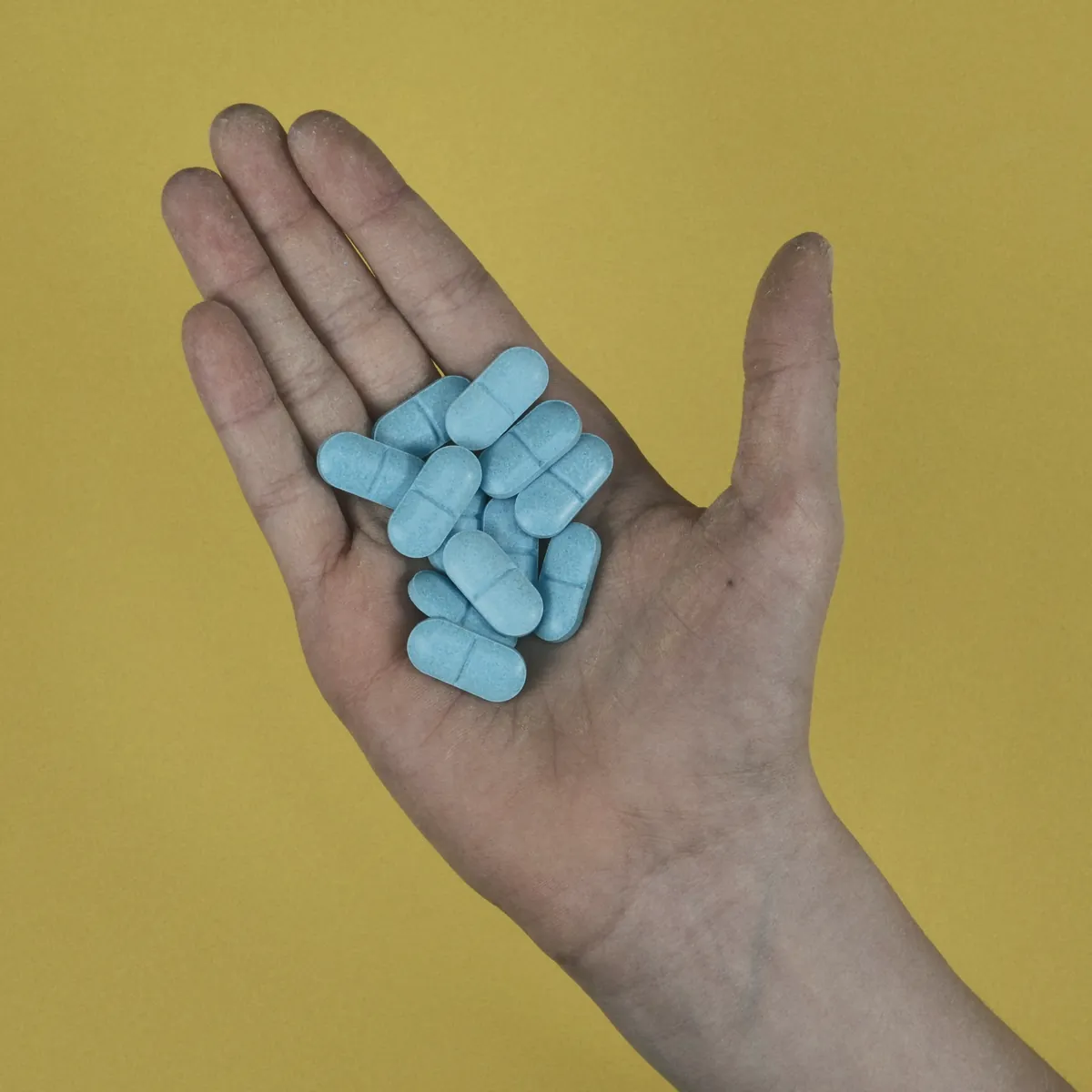

How PrEP stops HIV
PrEP works by having HIV medicine already in your body before the virus arrives, so HIV can’t make copies of itself and take hold.
The standard PrEP tablet combines two antiretroviral medicines, tenofovir disoproxil and emtricitabine (often written TDF/FTC). They block an enzyme HIV needs in the first hours after it enters the body. Without that step, the virus can’t establish an infection.
PrEP is different from HIV treatment. Treatment uses three or more medicines for people already living with HIV; PrEP uses two medicines for people who are HIV-negative, which is why an HIV test always comes first.
The ways you can take it
- Daily PrEP: one tablet every day. It suits everyone who is eligible, including people who have vaginal or front-hole sex.
- On-demand (2-1-1): two tablets 2–24 hours before sex, then one 24 hours and one 48 hours after the first dose. It is only for cis men who have sex with men and trans women not taking estradiol, never for vaginal or front-hole sex, and not for anyone with hepatitis B. Our 2-1-1 dose planner works out the times.
- Long-acting injections: cabotegravir every two months, with twice-yearly lenacapavir on the way. Read about injectable PrEP in Bangkok and the status of lenacapavir in Thailand.
You’ll find a side-by-side comparison on our PrEP options page.
How well does PrEP protect you?
Taken as prescribed, PrEP lowers the risk of getting HIV from sex by about 99%, and from injecting drugs by at least 74%, according to the CDC. Daily tablets reach maximum protection after about 7 days for receptive anal sex and about 21 days for receptive vaginal sex and injecting.
Almost every infection seen in people on PrEP is linked to doses being missed, so a routine that fits your life matters more than anything else. Our guide to how effective PrEP really is explains the numbers, and what to do after a missed dose covers the common slips.
What PrEP doesn’t do
- It doesn’t protect against other sexually transmitted infections; see PrEP, condoms and STIs.
- It doesn’t prevent pregnancy.
- It can’t treat an exposure that has already happened. If that was in the last 72 hours, you need PEP instead.
Exposed in the last 72 hours? You need PEP, not PrEP. Ask us about urgent PEP now.
Who PrEP is for
PrEP is for anyone, of any gender or sexuality, with a real chance of coming into contact with HIV: new or casual partners, a partner whose status you don’t know, inconsistent condom use, a recent STI or repeated PEP. Read who should take PrEP, or answer five questions on our PrEP self-check page.
Starting PrEP in Bangkok
Starting takes one visit: a private consultation, an HIV test, kidney and hepatitis B checks, and a prescription. After that you come back about every three months for an HIV test and a refill. See what happens at your visit, the tests PrEP needs and what PrEP costs in Thailand.
Questions we haven’t answered here are probably on our PrEP FAQ page.
Written by the HIV PrEP Bangkok team, based on WHO and CDC guidance. Last updated 2 October 2026.